 FirstNom
Dairy & eggs
Cottage cheese for babies
Cottage cheese solves the two problems hard cheese creates for babies: it needs no cutting and it carries far less salt.
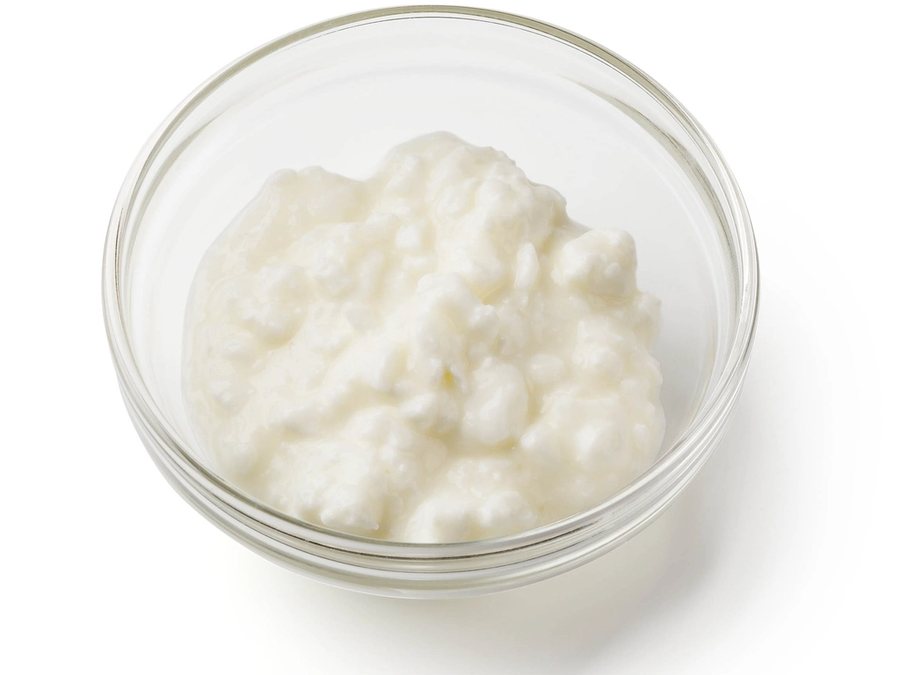
When can babies have cottage cheese?
From around 6 months. Full-fat, plain and unsalted where you can find it — some brands are noticeably saltier than others, so compare labels.
How do you serve cottage cheese to a baby?
The shape is what makes a food safe, and it changes as your baby’s grip and chewing change. Find your baby’s age band.
-
6–8 months
Plain, on a pre-loaded spoon, or mixed with mashed fruit or vegetable. Full-fat.
-
9–11 months
In a bowl for spoon practice, or mixed into other food.
-
12–18 months
As a dip, mixed with fruit, or spread on toast.
-
18–24 months
As the family eats it. Still full-fat under 2.
Prep tip
Cottage cheese mixed into mashed vegetables adds protein and stops them drying out — a useful trick for foods your baby has started rejecting.
Storage
Refrigerate and use within the date. It does not freeze well — the texture separates.
Is cottage cheese a choking hazard for babies?
Very low risk. The curds are soft and break apart easily. Large-curd versions can be squashed with a fork if you prefer a smoother texture.
Whatever you serve, stay within arm’s reach, keep your baby upright in a supportive seat, and never let them eat in a moving car, buggy or carrier. Gagging is loud and normal. Choking is silent.
Is cottage cheese a common allergen?
Cottage cheese is a milk product. Milk is one of the nine common allergens and the most common in infancy, though most children outgrow it. If yogurt has gone down without a problem, cottage cheese is very unlikely to cause one.
Is cottage cheese healthy for babies?
Cottage cheese is unusually high in protein for a soft dairy food, and lower in salt than most cheeses. It is a good vehicle for fruit and a good binder for dry foods — stirred into mashed vegetables it adds protein and moisture at once.
| Protein | Very high |
|---|---|
| Calcium | Good source |
| Vitamin B12 | Good source |
| Selenium | Good source |
| Iron per serving | ~0.1 mg |
Common questions about cottage cheese
Is cottage cheese lower in salt than cheddar?
Considerably — usually a third or less of the sodium per 100 g. That makes it a better everyday dairy for a baby than hard cheese.
Full-fat or low-fat?
Full-fat under 2 years. Babies need the fat, and low-fat versions offer no benefit at this age.
Guides for this food
Reference material
Guidance on this page follows the sources listed below.
Foods parents look at next
Dairy & eggs
Yogurt
Plain whole-milk yogurt is fine from 6 months — long before cow's milk as a drink.
Dairy & eggs
Cheese
Calcium, fat and protein in one — the trick is picking a low-salt one and cutting it right.
Dairy & eggs
Ricotta
One of the lowest-salt cheeses, high in protein and soft enough to spoon.
Dairy & eggs
Cream cheese
Soft, spreadable and lower in salt than hard cheese — a good toast partner.