 FirstNom
Choking & safety
Gagging vs Choking: How to Tell the Difference in Two Seconds
Gagging is loud, red-faced and normal. Choking is silent. Knowing which one you are watching is the single most useful thing you can learn before starting solids.
· 4 min read
The first time your baby gags on a piece of food, your body will tell you they are choking. They are almost certainly not. Learning the difference before you need it is worth more than any piece of feeding equipment you will buy.
The two-second version
Gagging is loud. Coughing, spluttering, a red face, watering eyes, sometimes retching or bringing food back up. The baby is making noise, which means air is moving.
Choking is silent. No cough. No cry. No sound at all, or a high-pitched whistling. The face may go pale, then blue around the lips. The baby may look panicked or may go limp.
That is the whole distinction, and it holds up under pressure: noise means air. A baby who is coughing hard is clearing their own airway more effectively than you can.
Why babies gag so much at first
The gag reflex sits much further forward on the tongue in a young baby than it does in an adult. That is deliberate — it means food that has gone too far back gets pushed forward again before it can reach the airway. It is a safety system that is set to be over-sensitive, and it is why babies gag on things that would not trouble a toddler.
As a baby learns to move food around their mouth, the reflex migrates backward and gagging becomes much less frequent. Most families see a lot of it in the first three or four weeks and very little by three months in.
Gagging on the same food repeatedly is usually a preparation problem rather than a readiness problem. If your baby gags every time on green beans, the beans are probably not cooked soft enough.
What to do when your baby gags
Very little, and that is the hard part.
- Stay calm and stay put. Your face is information to your baby. A panicked parent makes a gag frightening.
- Do not reach into their mouth. A blind finger sweep can push food further back and convert a gag into an obstruction. This is worth repeating because the instinct is overwhelming.
- Do not pick them up or turn them upside down. Changing position mid-gag can move the food the wrong way.
- Let it finish. It usually takes a few seconds. They may bring food forward, spit it out, or swallow it.
Afterwards, carry on. Making a drama of a gag teaches a baby that eating is frightening.
What to do when your baby chokes
If there is no sound, no cough and no breathing, act immediately.
Shout for help and call your emergency number — or have someone else call while you start. Do not drive to a hospital.
For a baby under 1, the standard sequence taught in paediatric first aid is five back blows followed by five chest thrusts, repeated. For a child over 1 it is back blows and abdominal thrusts.
This article is not a substitute for being taught that properly. Reading the sequence and performing it under pressure are completely different things. A two-hour paediatric first-aid class before you start solids is the single highest-value preparation available, and most areas run them cheaply through the local health service, the Red Cross or St John Ambulance.
The foods that cause the most trouble
Choking risk is mostly about shape, size and hardness — not about which food it is. The dangerous combination is round, firm and roughly airway-sized, because that shape can seal an airway completely rather than allowing air past.
The repeat offenders:
- Whole grapes — the most-cited hazard of all. Quarter them lengthways, not across, until around 4 or 5 years.
- Raw carrot — hard, round and does not compress. Cooked until soft, it is a low-risk food.
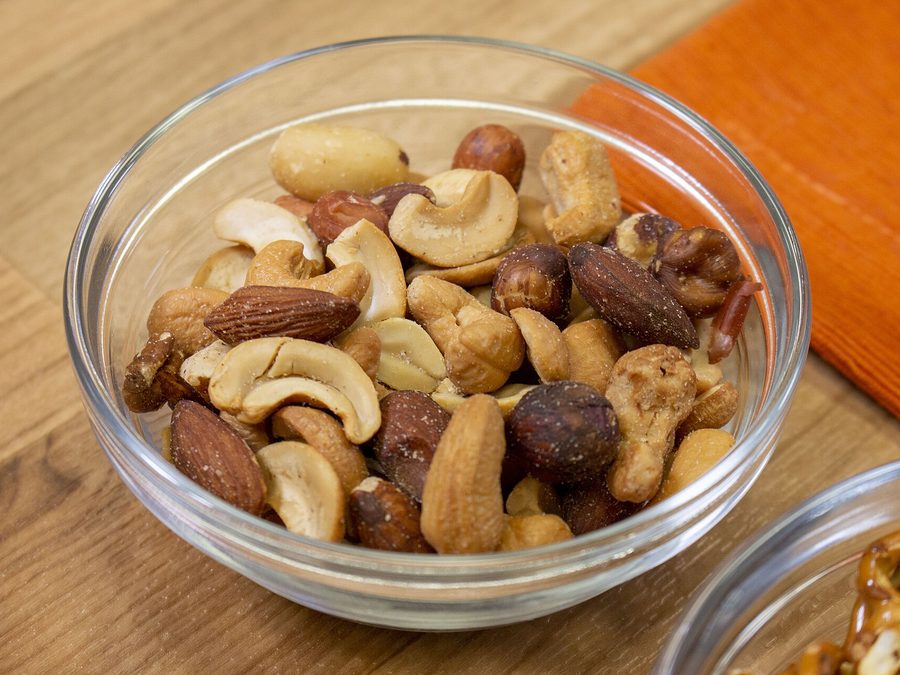
- Whole nuts — not until around 4 to 5 years. Nut butters and ground nuts should start at 6 months.
- Popcorn — light, irregular, easily inhaled, with hard unpopped kernels. Not before 4 years.
- Cheese cubes — springy and non-compressible. Grate or tear cheese instead.
- Whole blueberries and cherry tomatoes — same hazard class as grapes. Quarter them.
- Hard raw fruit and vegetable chunks — apple, celery, raw pepper.
The rule that removes most of this: cut round things lengthways, and squash-test everything else between your thumb and forefinger. If it does not give under gentle pressure, it is not ready.
The setup matters as much as the food
- Always seated, always upright, in a chair with proper trunk support. Not reclined, not on a lap, not walking around.
- Never in a moving car, buggy or carrier. You cannot see, and you cannot intervene.
- Always within arm’s reach. Not in the next room, not glancing over.
- One piece at a time. A tray with fifteen pieces of food invites stuffing, which is the most common route to a real problem.
- No distractions. Screens, siblings performing, running around. Eating is the activity.
The honest summary
Gagging is normal, frequent and safe, and it will happen a lot. Choking is rare, silent and an emergency. Almost every parent who thinks their baby choked watched their baby gag.
Prepare the food properly, sit them up, stay close, and get yourself on a first-aid course. That covers the overwhelming majority of the risk.
Questions parents ask
Is gagging dangerous?
No. Gagging is a protective reflex that pushes food forward when it has gone too far back. It is loud, it looks alarming, and it is the body doing exactly what it should. Babies gag frequently in the first weeks of solids and it becomes less common as they learn to manage food.
Should I put my finger in my baby's mouth if they gag?
No. Reaching in can push food further back and turn a gag into a genuine obstruction. Stay calm, stay close, and let the reflex work. Only intervene if the baby goes silent, cannot cough, and cannot breathe.
Does baby-led weaning increase choking risk?
The available research, including the BLISS randomised trial, has not found a higher rate of choking in baby-led weaning compared with spoon-feeding, provided high-risk foods are avoided and pieces are prepared appropriately. Preparation and supervision matter far more than which approach you choose.